Cyclopean Walls at Foothills of Mt Ainos
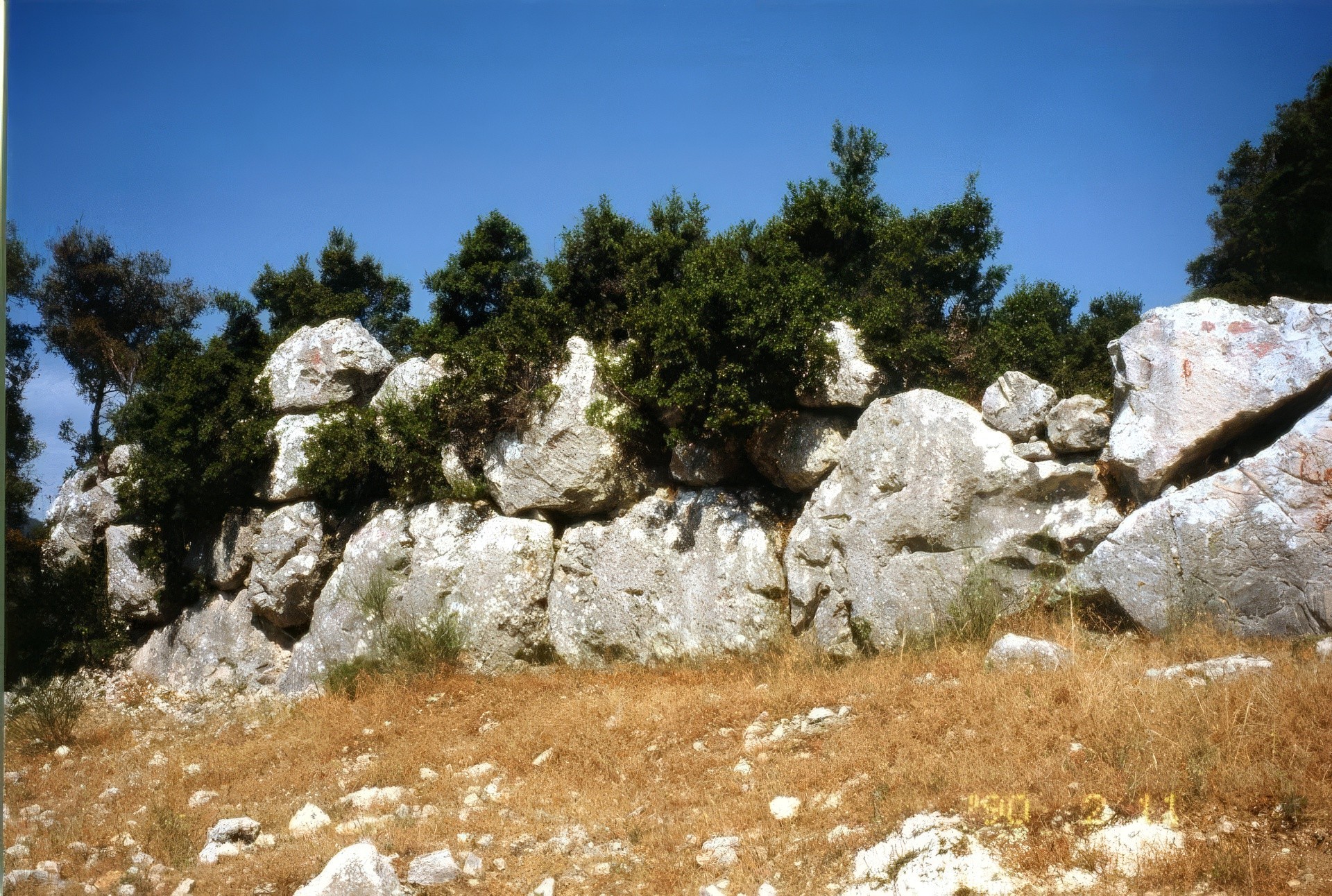
The Πυργί (Pyrgi), also known as "Κάστρο Σολδάτου" (Soldatou Castle), is a significant prehistoric acropolis situated at the foothills of the fir-covered Mount Ainos in southeastern Cephalonia. This site served as a strategic defensive outpost designed to protect the northwestern side of the fertile, water-rich Tzanata valley (historically known as the "Herakleion Field").
Archaeological Features at Pyrgi
According to the sources and archaeological records, the site contains several distinct layers of construction:
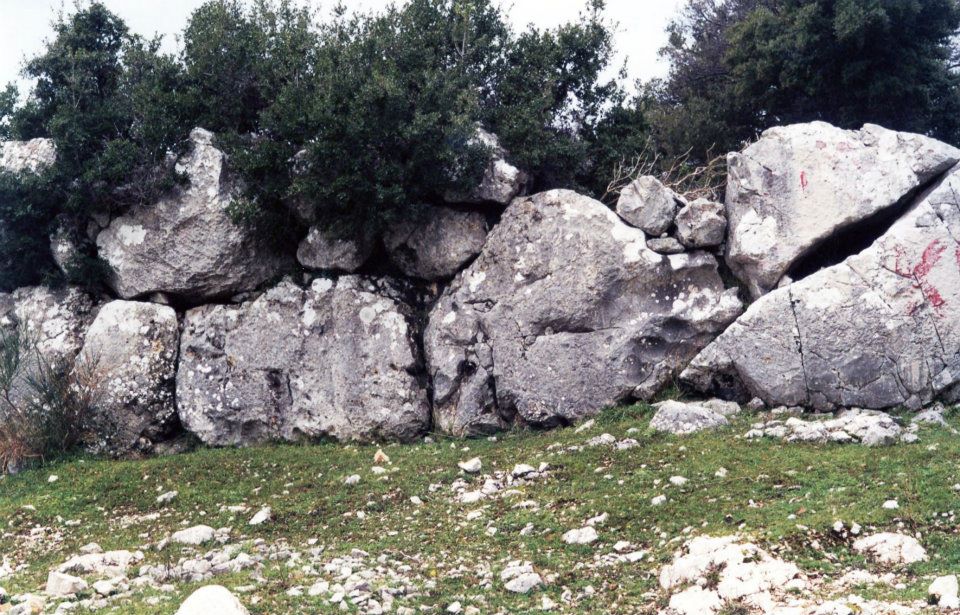
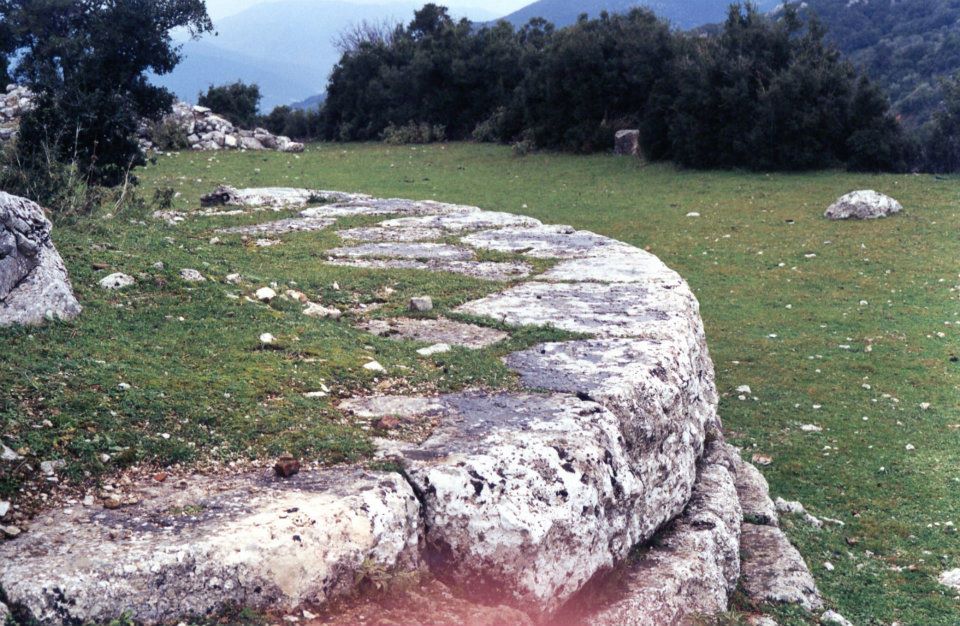
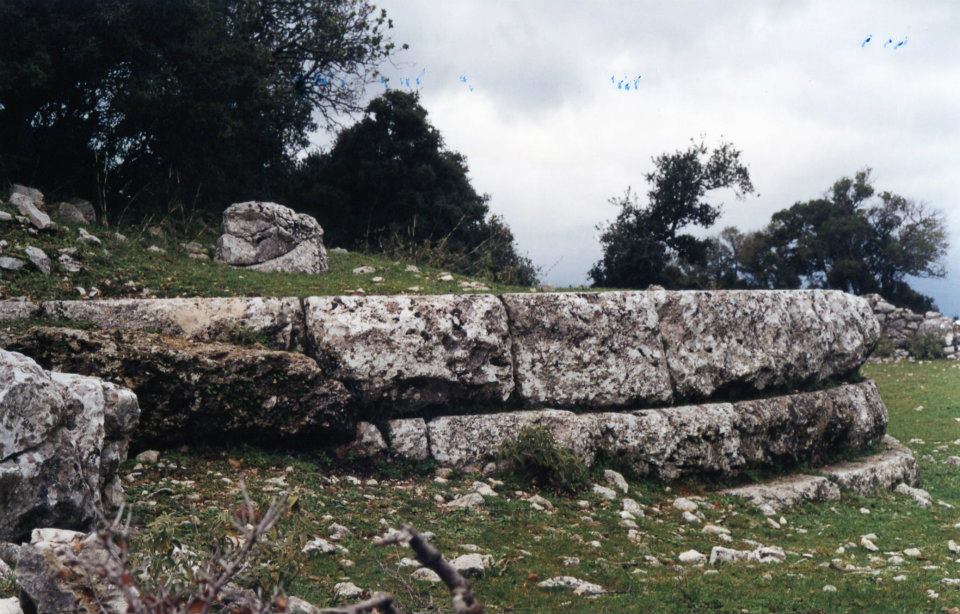
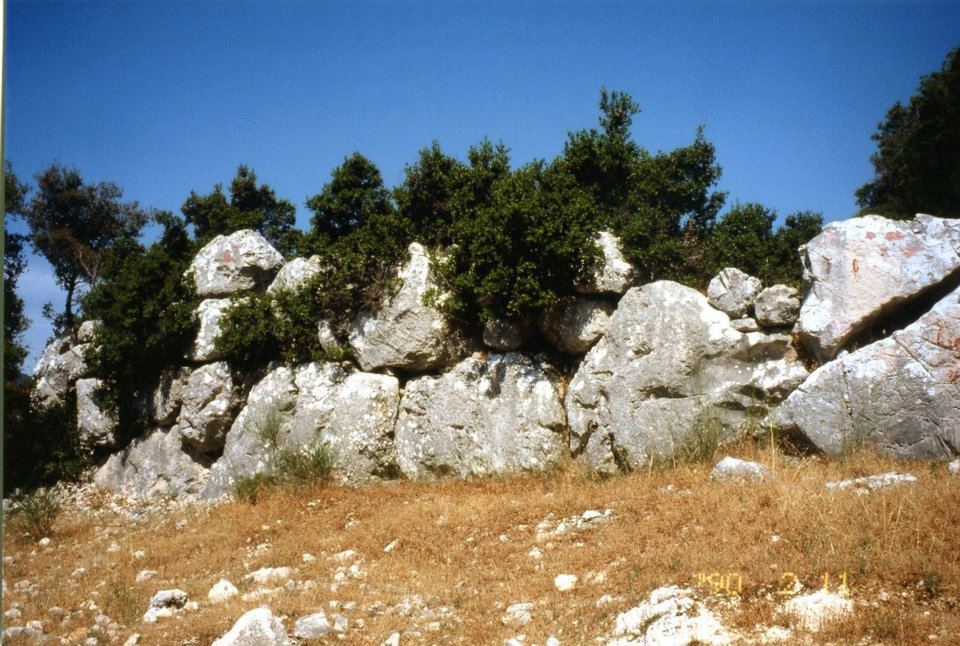
Cyclopean Fortifications: The acropolis is defined by prehistoric walls built with oversized boulders, typical of the megalithic Cyclopean masonry used in the region during the Bronze Age.
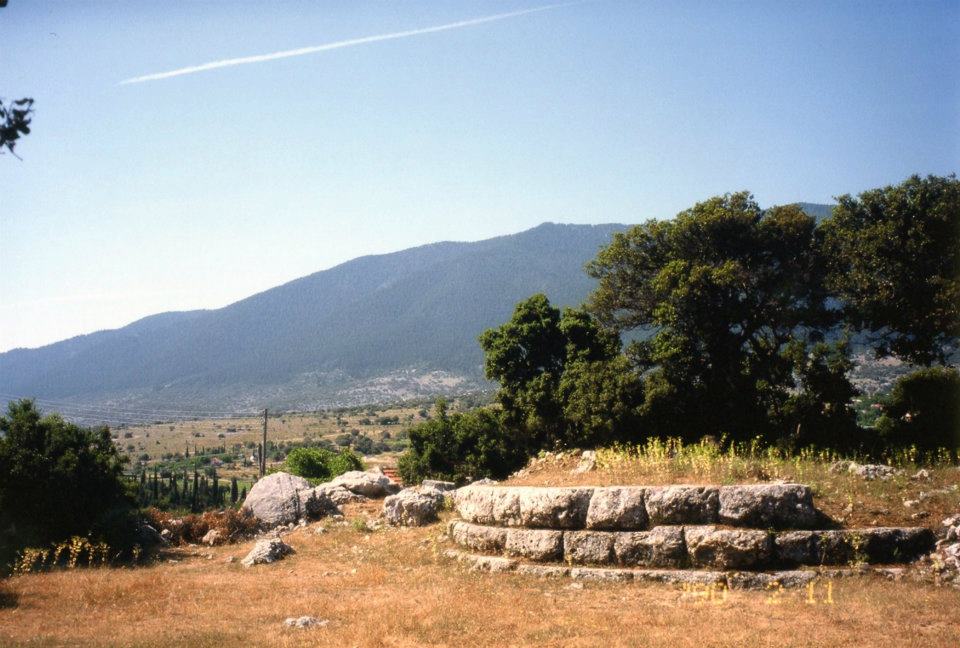
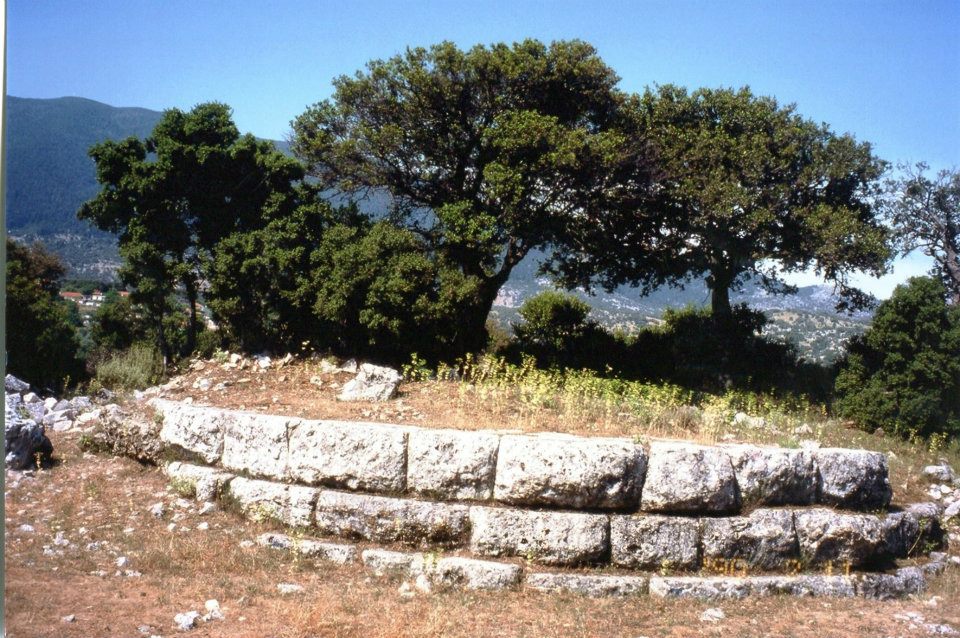
Altar of Zeus Ainesios: Inside the perimeter of the prehistoric walls, archaeologists identified a circular megalithic structure. This is interpreted as a probable ancient altar or sanctuary dedicated to Ainis of Zeus (Zeus Ainesios), the deity associated with the neighboring peak of Mount Ainos.
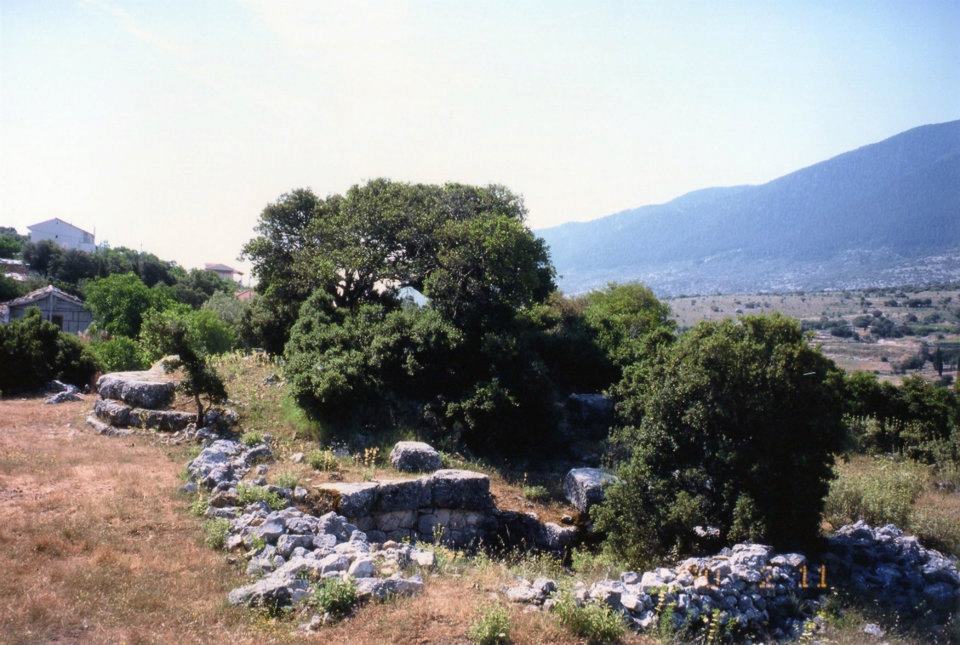
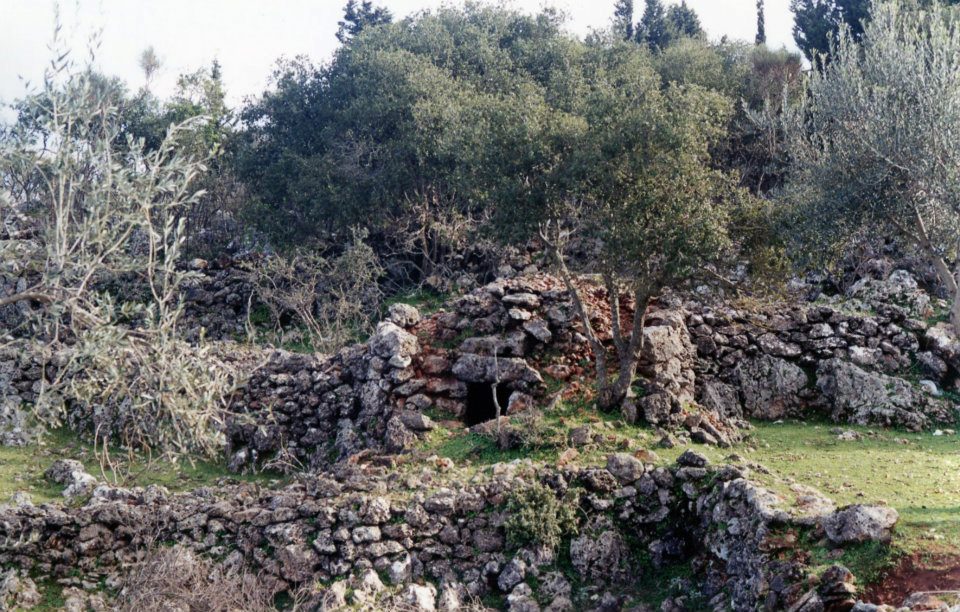
Historical and Byzantine Additions: During later historical periods, a water tank (υδατοδεξαμενή) was constructed within the walls. Furthermore, remains of a church and residential dwellings from the Byzantine period are still visible today as ruined remnants.
Relationship to Regional History
The location of Soldatou Castle is vital to the broader Mycenaean landscape of the region. It acted as a "Mountain Gate" sentinel, securing the entrance to the valley and the vital water resources provided by the Vohyna stream and the lake of "Great Akoli" (Abythos).
While the Ancient Acropolis of Pronnoi (Paliokastro) served as the primary administrative and naval center overlooking the harbor, Pyrgi functioned as the landward protector of the agricultural heartland, ensuring the security of the "great-hearted Cephalonians" who controlled this strategic junction of the Ionian Sea.
Pyrgi stands like a fortified lock on a valley's door; while the massive stones of its walls once kept invaders at bay, the ancient altar at its center served as a spiritual bridge connecting the people in the valley to the divine heights of the mountain above.
Selected bibliography concerning the specific area and the Mycenaean presence on the islands of Kefalonia.
John T. Pierce, “Homer’s Influence on Mycenaean Archaeology and the Understanding of Late Helladic Historical Geography” (John T. Pierce, Professor Emeritus, Departments of Geography and Archaeology, Simon Fraser University, Canada.) https://jaa.thebrpi.org/journals/jaa/Vol_12_2024/1.pdf
John Albanese: (2020). “Some Preliminary Finds from the Tholos Tomb and Ossuary at Borzi Hill, Tzannata, Kefalonia.” Revista Maracanan 22. Available at: http://seer.unirio.br/revistam/article/view/11211/10988.
Klavs Randsborg, KEPHALLENIA: Archaeology & History, The Ancient Greek Cities, BLACKWELL MUNKSGAARD Vol. 1 & 2, 2002.
Lazaros Kolonas: “Tzannata of Poros,” Archaiologikon Deltion, vol. 47 (1992), part B1, Chronika, pp. 154–157.
Lazaros Kolonas: archaiologia.gr/print-article/?print=35604
Lazaros Kolonas: “Built Chamber Tomb at Tzannata of Poros, Cephalonia,” Kephalliniaka Chronika, vol. 11, pp. 381–382.
Lazaros Kolonas: Proceedings of the Conference on Letters, History and Folklore of the Pronnon region, “The Tholos Tomb of Tzannata of Poros,” p. 339.
Lazaros Kolonas: “The geographic advantage, the relief and the prehistory of an area, decisive factors for the foundation of a Mycenaean installation. The example of Cephalonia,” Proceedings of the XI Panionian International Conference, Argostoli Kefalonia2018, vol. 5, pp. 111–122.
Lazaros Kolonas: “Ancient Installations of Southeastern Cephalonia,” 7th Panionian Conference, vol. 2, pp. 37–45, Lefkada 2002.
Antonis Vasilakis: ttp://www.elliniki-gnomi.eu/archives/47791 “‘Odysseus was king of the Cephalonians’” | ELLINIKI GNOMI.
Antonis Vasilakis: Kefallonia Newspaper, interview with Dr. Antonis Vasilakis by Athanasia Markatou & archaiologia.gr/print-article/?print=35604
Antonis Vasilakis: “Mycenaean settlement at Tzannata of Poros, Cephalonia,” archaiologia.gr/?p=35604
Antonis Vasilakis (Honorary Director, Ministry of Culture; Former Ephor of Antiquities of Cephalonia–Ithaca & Zakynthos): “Mycenaean Seminar: Late Helladic Apsidal / Ellipsoid (Ovoid) Megaron at Tzannata of Poros, Cephalonia.”
Antonis Vasilakis: “Late Helladic Ellipsoidal Megaron at Tzannata of Poros. New evidence for the Late Helladic period in Cephalonia,” Proceedings of the 1A Panionion Conference 2018, vol. 5, pp. 51–74. https://www.openbook.gr/ia-diethnes-panionio-synedrio/
Ioannis Moschos, “Mycenaean occupation in Cephalonia. Population nuclei, list of sites and conclusions,” 7th Panionian Conference announcement, Lefkada, 2002.
Ioannis Moschos, “The Area of Pronnon and the eastern coast of Cephalonia before history, topography of the island, catalogue of sites and conclusions,” Proceedings of the Pronnon Region Conference 2005, pp. 227–324.
Odysseas Metaxas, “Observations on the early biography of the Odyssey,” 2020, Kymothoe magazine, vol. 30, pp. 55–84.
Odysseas Metaxas: Diverging trajectories within the west Mycenaean koine: the evidence from Kefalonia. (book chapter) In Archaeology of the Ionian Sea, Oxbow Books (2022) 10.2307/j.ctv22fqc0s.18 (pp. 169-178)
Odysseas Metaxas: “Archaeolinguistic elements from Cephalonia,” 1A Panionian Conference 2018, vol. IV, pp. 751–769. https://www.openbook.gr/ia-diethnes-panionio-synedrio/
Ioannis Boskos & Odysseas Metaxas: “The Tholos Tomb of Mavrata 80 years later,” Proceedings of the 1A Panionion Conference 2018, 5th volume, pp. 125–137. https://panionio.files.wordpress.com/2020/07/04-boskos-metaxas-sel.-123-138_m.pdf
Georgia Stratouli, Odysseas Metaxas, Anastasios Bekiaris, Anagia Sarpaki: “Practical social cohesions in the Neolithic of the Ionian: readings of archaeological material from the Drakaina Cave in Poros, Cephalonia,” 11th International Panionian Conference (Corfu, 30 April – 4 May 2014), published in the Proceedings 2017.
E. M. Chatziotou–G. Stratouli–E. Kotzambopoulou, “The Cave of Drakaina,” Archaeological Proceedings of Athens (1989), pp. 31–60 & Evangelia-Miranda Chatziotou, Georgia Stratouli, “The Drakaina Cave at Poros Cephalonia: evidence for prehistoric use and cult in historical times,” Proceedings of the 6th Panionian Conference, vol. A, pp. 61–76.
Stamatina Zapanti, “The participation of the Pronnon of Cephalonia in the Athenian Alliance,” Keph. Chronika, vol. 5, pp. 193–200.
Olympia Vikatos, “In the footsteps of the Taphians pirates: their wanderings in the Ionian Sea during the Late Bronze Age and the Dark Ages,” Proceedings Proceedings of the XI Panionian International Conference, Argostoli Kefalonia 2018, pp. 75–110.
Christina Souyoudzoglou-Haywood, Archaeology and the Search for Homeric Ithaca: The Case of Mycenaean Kephalonia Article in Acta Archaeologica · December 2018
Christina Souyoudzoglou-Haywood, Reuse and cult at the Mycenaean tombs of Kephalonia in the ancient historical periods. July 2020 In book: Proceedings of the XI Panionian International Conference, Argostoli Kefalonia 2018 (pp.223-242)
Christina Souyoudzoglou-Haywood, The Ionian Islands in the Bronze Age and Early Iron Age (3000-850 BC), 2nd edition. August 2025 Publisher: Liverpool University Press.
Christina Souyoudzoglou-Haywood, Islands in the stream:: a maritime perspective of the south-central Ionian islands in the Late Bronze Age, January 2022 DOI:10.2307/j.ctv22fqc0s.15 In book: Archaeology of the Ionian Sea (pp.117-136)
Christina Souyoudzoglou-Haywood, Archaeology of the Ionian Sea: Landscapes, seascapes and the circulation of people, goods and ideas from the Palaeolithic to the end of the Bronze Age January 2022 Publisher: OXBOW BOOKS
Petros Petratos, “From Heracles to the Dragon. Arakli and the strait of Poros,” Proceedings 1st Conference on the Letters, History and Folklore of the Pronnon region, Cephalonia 2005, pp. 379–395.
Petros Petratos, “Homeric Nymph Cave: Melissani Cave,” Keph. Chronika vol. 8, 2003, pp. 239–265.
Petros Petratos, “The Homeric Krokyleia,” Kephalliniaka Chronika, vol. 9, 2003, pp. 155–165.
Marinatos, Spyridon N. 1962. Kefallinia: A Historical and Archaeological Walk.
(Πρωτότυπο: Κεφαλληνία. Ιστορικός και αρχαιολογικός περίπατος)Marinatos, Spyridon.1923 (for the years 1920–21).“Archaeological Investigations throughout Cephalonia.”(Πρωτότυπο: «Αρχαιολογικαί έρευναι ανά την Κεφαλληνίαν»)
Marinatos, Spyridon. 1932. “The Goekoop Excavations in Cephalonia.” (Πρωτότυπο: «Αι ανασκαφαί Goekoop εν Κεφαλληνία»)
Marinatos, Spyridon. 1933. “The Goekoop Excavations in Cephalonia (Part II).”
(Πρωτότυπο: «Αι ανασκαφαί Goekoop εν Κεφαλληνία» — συνέχεια του προηγούμενου τόμου)Marinatos, Spyridon. 1951. “Excavations in Cephalonia.” (Πρωτότυπο: «Ανασκαφαί εν Κεφαλληνία»)
Marinatos, Spyridon. 1964 (published 1967). “Investigations in Sami of Cephalonia.”
(Πρωτότυπο: «Έρευναι εν Σάμη της Κεφαλληνίας»)Henriette Putman Gramer – Gerasimos Metaxas, Homeric Ithaca: An unidentified Mycenaean center in the islands of the Cephalonians, Cactus Editions, Athens 2000.
Henriette Metaxas-Putman Cramer, Makis Metaxas, Jan Pierce, John Pierce.
"IN far SEEN ITHACA Unravelling Homeric Riddles in the Ionian Sea" (forthcoming).Athens APE-MPE: “The most important archaeological events in Greece in 2011,” scientists speaking to APE-MPE, 28 Dec. 2011.
Vaggelis Pantazis, “The size of Homeric Ithaca,” Kephalliniaka Chronika, vol. 8, Argostoli 1999, p. 271.
Where Is It?
Gallery