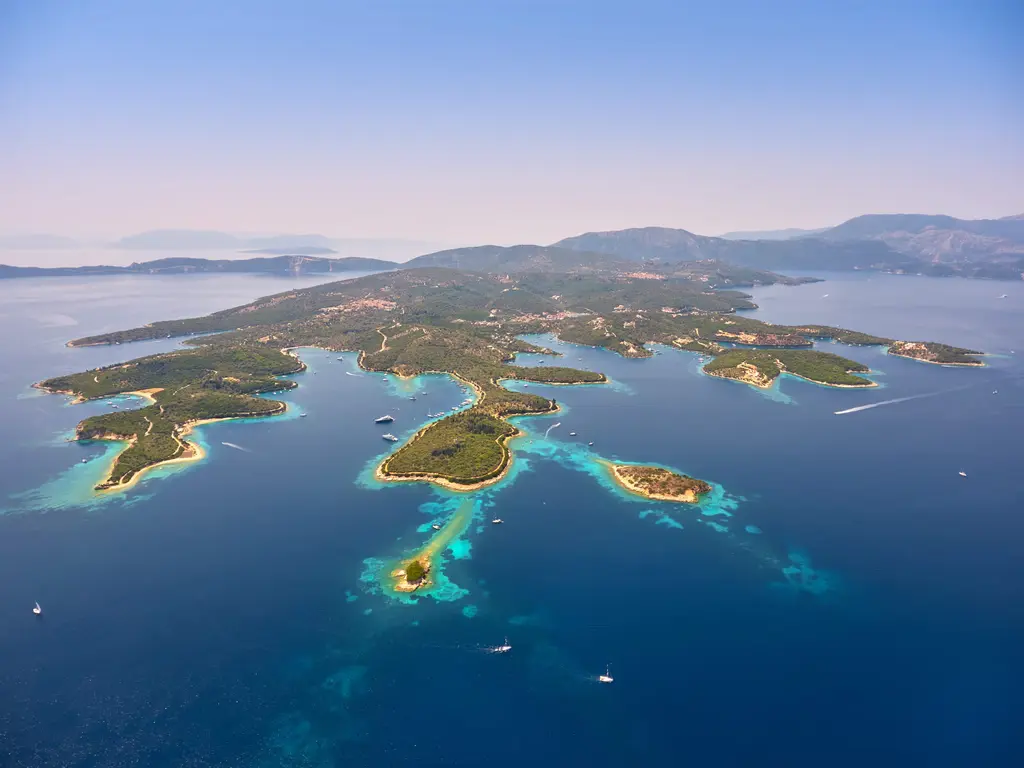
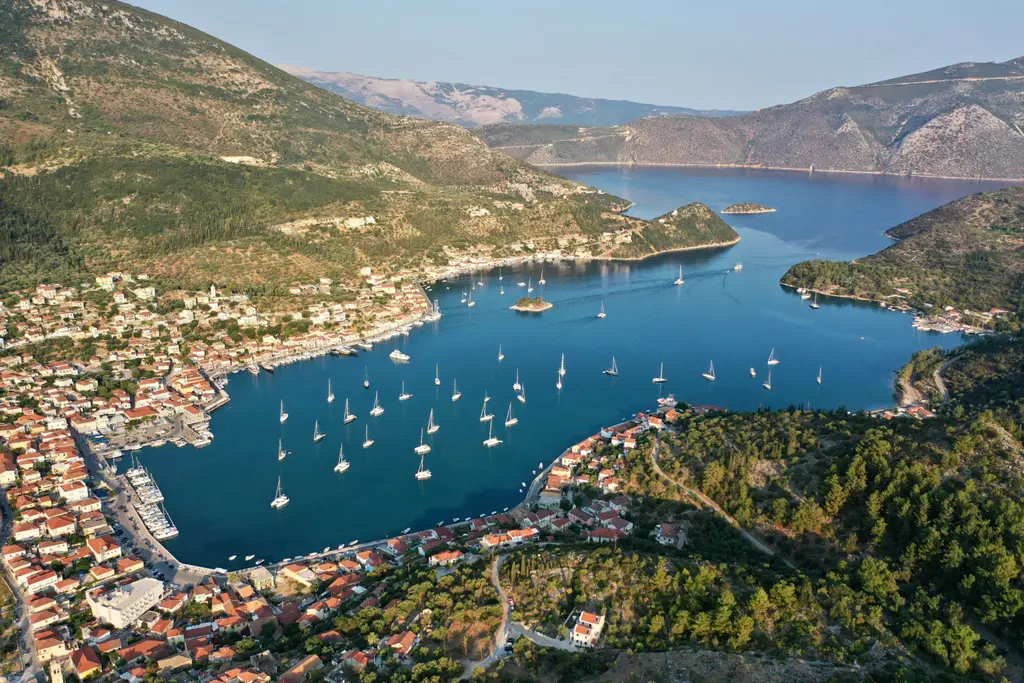
Homer's Asteris
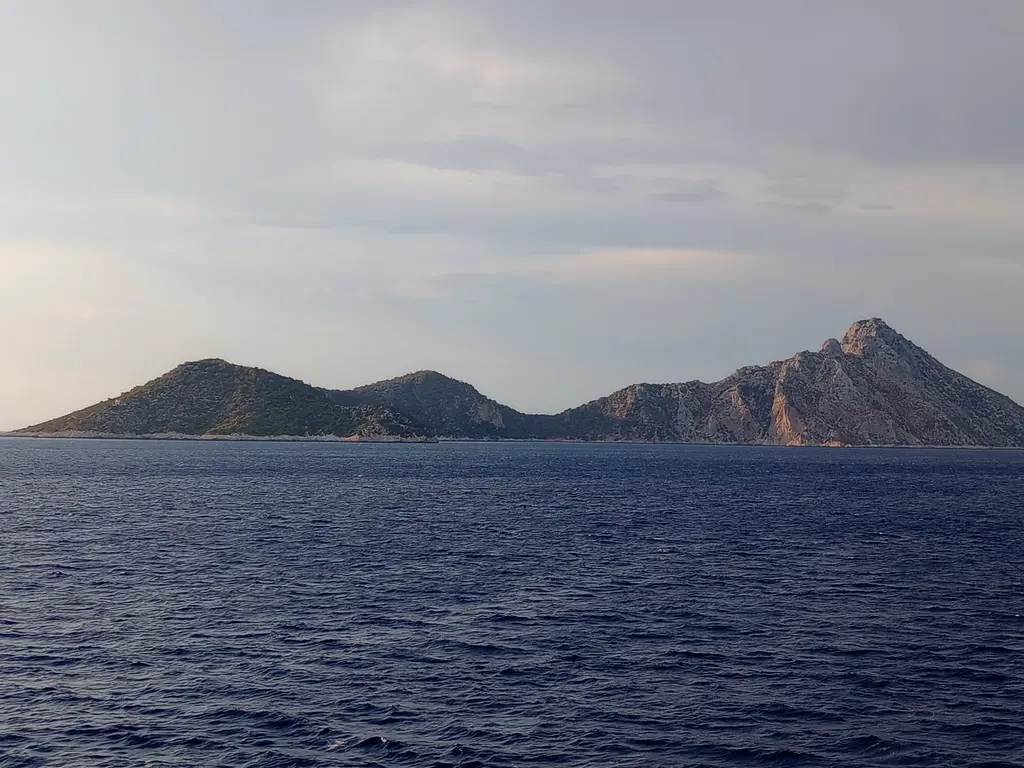
Asteris (Asterida) is one of the "ghost islands" of Homeric topography, whose physical traces were completely lost in the historical period. The poet dedicated a multitude of specific details to this island, highlighting it as one of the central landmarks defining the overall plot of the epic.
What is the Island Today?
Based on purely rational readings of the Homeric descriptions, the island that corresponds to Homeric Asteris is the present-day island of Oxia.
Oxia is the largest and most pointed island within the group known today as the Echinades Islands. It is located at the confluence of the sea straits of the Ionian Sea, directly opposite the mouth of the Achelous River.
What is the Proposed Island?
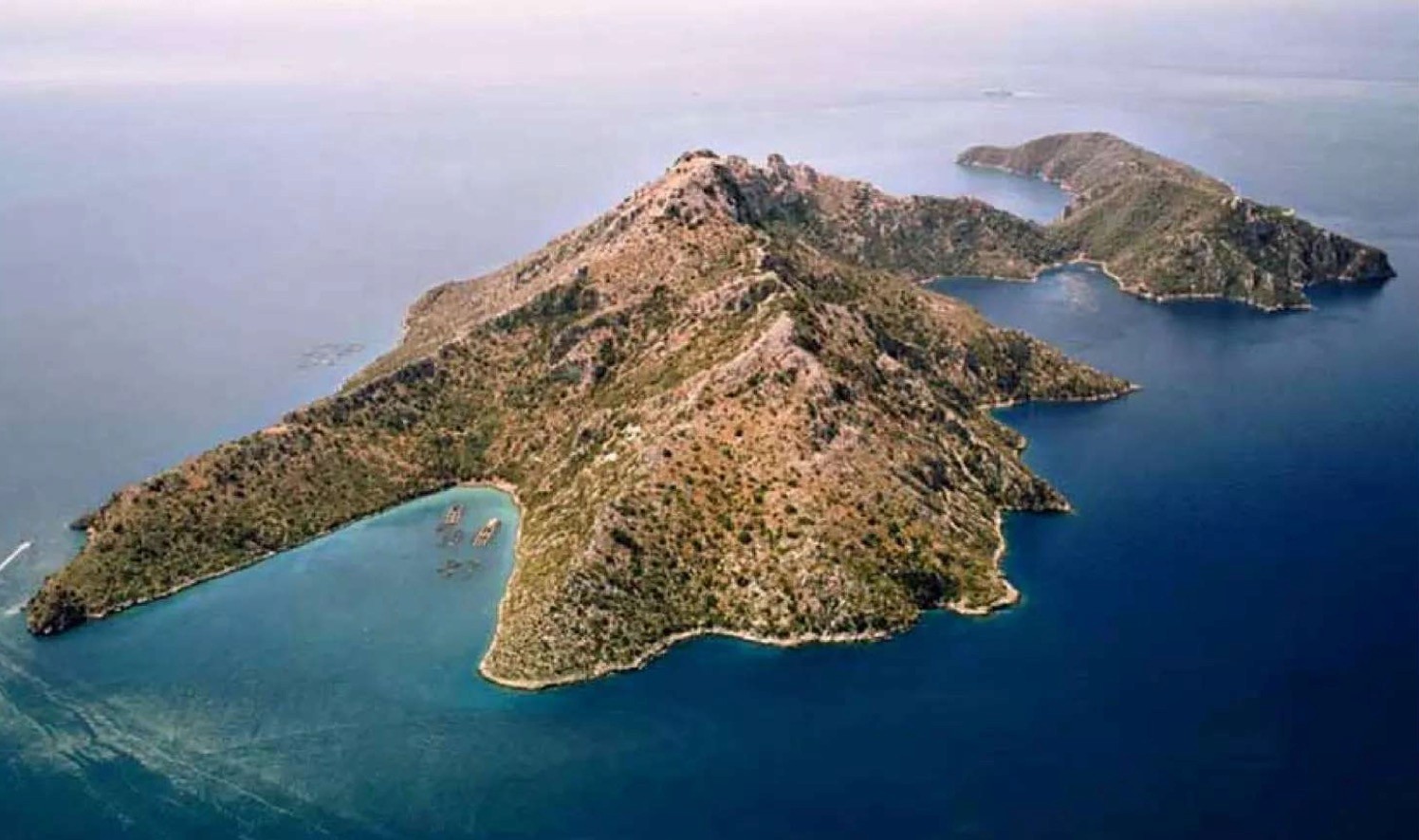
The proposed island is Oxia. This identification resolves the mystery of the missing island, whose true existence was often classified by the global scientific community into the mythical world of Homer, along with islands like Ogygia and Aeolia.
The congruence between Oxia's precise geographical features and the detailed Homeric descriptions led to the conclusion that Oxia was indeed the island of the suitors.
What is Written in Homer's Iliad and Odyssey About the Island?
Asteris is mentioned in the Odyssey as the place where the suitors of Ithaca’s throne laid a deadly ambush for Telemachus when he returned from Pylos. The suitors waited there for twenty-eight consecutive days and nights.
Homer provides a detailed description of Asteris, noting that it was a small but distinct, strategic island:
Rocky and Not Large: It is described as an island located "in the middle of the sea, rocky" (messē hali petrēessa) and "not large" (ou megalē).
Harbors: It possessed "safe and twin harbors" (limenes d' eni naulokhoi autē amphidymoi). These twin harbors were opposite each other (one harbor opposite the other).
Topography: It had wind-swept mountain peaks (ākrias ēnemoessas).
Strategic Location: It was located in the maritime strait through which ships traveled to Cephalonia and Ithaca.
How Do the Writings Match the Topography of the Island?
The topography of the present-day island of Oxia matches the ancient Homeric description of Asteris in almost every detail, meeting a significant number of confirmation requirements.
Rockiness and Peaks: Oxia is described as rugged and steep, with a high peak (426 meters) towards the west, corresponding to the "rocky" island with "wind-swept peaks". The plural name Oxiae likely derives from the verb Thooō (to sharpen/make sharp), referring to its sharp-pointed nature.
Twin Harbors (Amphidymoi Limenes): Oxia is composed of two sections connected by a narrow isthmus (approximately 300 meters long). On either side of this isthmus, twin bays are formed, perfectly matching the Homeric requirement for "safe and twin harbors".
Location: Oxia is situated in a key position within the Cephalonia Strait. It is described as being equidistant from Cephalonia, Ithaca, and the Peloponnese, placing it directly "in the middle" (messē hali) of the maritime route. This location made it crucial for navigation and controlling the entrance and exit of the Gulf of Patraikos.
Strategic Function (Piracy): The suitors chose this island because its strategic position, size, and particularly its twin, all-weather harbors made it renowned for maritime piracy from ancient times up to recent history.
Nautical Beacon: The name Asteris (star-like) is suitable because, due to its height and commanding visibility, Oxia functioned as a nautical lighthouse or reference point for seafaring Mycenaean sailors, guiding ships through the straits.
A Theory as to Why Its Name Changed
The disappearance of the name Asteris from the map and its transposition to the modern name Oxia is part of the systematic cartographic reorganisation and toponymic upheaval that took place in Western Insular Greece after the collapse of the Mycenaean world (the Dark Ages).
The specific difficulty in identifying Asteris for centuries stems from an intervention in the Homeric text during historical antiquity, primarily during the Alexandrian period:
The Spurious Verse: The original description of Asteris (Od. d 844-846) was authentic and did not specify its location relative to Ithaca and Samos. However, a parenthetical verse was later inserted: "[between Ithaca and Samos, the rocky one]" (messēgus Ithakēs te Samoio te paipaloessēs).
The Purpose of the Intervention: This verse was added to try to align the Homeric topography with the geographical names that had prevailed during historical times.
Misidentification: The added verse compelled later geographers and researchers, such as Strabo, to search for Asteris between modern Ithaca and modern Cephalonia (the assumed historical locations). This search led them to misidentify a tiny, flat islet called Daskalio (or Skopele) as the Homeric Asteris, despite Daskalio lacking any of the described features, such as deep harbors or high peaks.
Preserved Truth: The genuine Homeric verses that omit this contradictory line were preserved in some manuscripts and cited by Strabo, which allowed modern research to finally liberate Asteris from the constraint of the spurious verse and correctly identify it as Oxia.
The modern name Oxia (meaning sharp-pointed) likely replaced the Homeric name Asteris (meaning star-like/beacon) due to natural geographical characteristics, while the confusion caused by the textual intervention obscured its true ancient identity.
For more information visit The Talking Stones post on The Homer's Ithaca blog.
Selected bibliography concerning the specific area and the Mycenaean presence on the islands of Kefalonia.
John T. Pierce, “Homer’s Influence on Mycenaean Archaeology and the Understanding of Late Helladic Historical Geography” (John T. Pierce, Professor Emeritus, Departments of Geography and Archaeology, Simon Fraser University, Canada.) https://jaa.thebrpi.org/journals/jaa/Vol_12_2024/1.pdf
John Albanese: (2020). “Some Preliminary Finds from the Tholos Tomb and Ossuary at Borzi Hill, Tzannata, Kefalonia.” Revista Maracanan 22. Available at: http://seer.unirio.br/revistam/article/view/11211/10988.
Klavs Randsborg, KEPHALLENIA: Archaeology & History, The Ancient Greek Cities, BLACKWELL MUNKSGAARD Vol. 1 & 2, 2002.
Lazaros Kolonas: “Tzannata of Poros,” Archaiologikon Deltion, vol. 47 (1992), part B1, Chronika, pp. 154–157.
Lazaros Kolonas: archaiologia.gr/print-article/?print=35604
Lazaros Kolonas: “Built Chamber Tomb at Tzannata of Poros, Cephalonia,” Kephalliniaka Chronika, vol. 11, pp. 381–382.
Lazaros Kolonas: Proceedings of the Conference on Letters, History and Folklore of the Pronnon region, “The Tholos Tomb of Tzannata of Poros,” p. 339.
Lazaros Kolonas: “The geographic advantage, the relief and the prehistory of an area, decisive factors for the foundation of a Mycenaean installation. The example of Cephalonia,” Proceedings of the XI Panionian International Conference, Argostoli Kefalonia2018, vol. 5, pp. 111–122.
Lazaros Kolonas: “Ancient Installations of Southeastern Cephalonia,” 7th Panionian Conference, vol. 2, pp. 37–45, Lefkada 2002.
Antonis Vasilakis: ttp://www.elliniki-gnomi.eu/archives/47791 “‘Odysseus was king of the Cephalonians’” | ELLINIKI GNOMI.
Antonis Vasilakis: Kefallonia Newspaper, interview with Dr. Antonis Vasilakis by Athanasia Markatou & archaiologia.gr/print-article/?print=35604
Antonis Vasilakis: “Mycenaean settlement at Tzannata of Poros, Cephalonia,” archaiologia.gr/?p=35604
Antonis Vasilakis (Honorary Director, Ministry of Culture; Former Ephor of Antiquities of Cephalonia–Ithaca & Zakynthos): “Mycenaean Seminar: Late Helladic Apsidal / Ellipsoid (Ovoid) Megaron at Tzannata of Poros, Cephalonia.”
Antonis Vasilakis: “Late Helladic Ellipsoidal Megaron at Tzannata of Poros. New evidence for the Late Helladic period in Cephalonia,” Proceedings of the 1A Panionion Conference 2018, vol. 5, pp. 51–74. https://www.openbook.gr/ia-diethnes-panionio-synedrio/
Ioannis Moschos, “Mycenaean occupation in Cephalonia. Population nuclei, list of sites and conclusions,” 7th Panionian Conference announcement, Lefkada, 2002.
Ioannis Moschos, “The Area of Pronnon and the eastern coast of Cephalonia before history, topography of the island, catalogue of sites and conclusions,” Proceedings of the Pronnon Region Conference 2005, pp. 227–324.
Odysseas Metaxas, “Observations on the early biography of the Odyssey,” 2020, Kymothoe magazine, vol. 30, pp. 55–84.
Odysseas Metaxas: Diverging trajectories within the west Mycenaean koine: the evidence from Kefalonia. (book chapter) In Archaeology of the Ionian Sea, Oxbow Books (2022) 10.2307/j.ctv22fqc0s.18 (pp. 169-178)
Odysseas Metaxas: “Archaeolinguistic elements from Cephalonia,” 1A Panionian Conference 2018, vol. IV, pp. 751–769. https://www.openbook.gr/ia-diethnes-panionio-synedrio/
Ioannis Boskos & Odysseas Metaxas: “The Tholos Tomb of Mavrata 80 years later,” Proceedings of the 1A Panionion Conference 2018, 5th volume, pp. 125–137. https://panionio.files.wordpress.com/2020/07/04-boskos-metaxas-sel.-123-138_m.pdf
Georgia Stratouli, Odysseas Metaxas, Anastasios Bekiaris, Anagia Sarpaki: “Practical social cohesions in the Neolithic of the Ionian: readings of archaeological material from the Drakaina Cave in Poros, Cephalonia,” 11th International Panionian Conference (Corfu, 30 April – 4 May 2014), published in the Proceedings 2017.
E. M. Chatziotou–G. Stratouli–E. Kotzambopoulou, “The Cave of Drakaina,” Archaeological Proceedings of Athens (1989), pp. 31–60 & Evangelia-Miranda Chatziotou, Georgia Stratouli, “The Drakaina Cave at Poros Cephalonia: evidence for prehistoric use and cult in historical times,” Proceedings of the 6th Panionian Conference, vol. A, pp. 61–76.
Stamatina Zapanti, “The participation of the Pronnon of Cephalonia in the Athenian Alliance,” Keph. Chronika, vol. 5, pp. 193–200.
Olympia Vikatos, “In the footsteps of the Taphians pirates: their wanderings in the Ionian Sea during the Late Bronze Age and the Dark Ages,” Proceedings Proceedings of the XI Panionian International Conference, Argostoli Kefalonia 2018, pp. 75–110.
Christina Souyoudzoglou-Haywood, Archaeology and the Search for Homeric Ithaca: The Case of Mycenaean Kephalonia Article in Acta Archaeologica · December 2018
Christina Souyoudzoglou-Haywood, Reuse and cult at the Mycenaean tombs of Kephalonia in the ancient historical periods. July 2020 In book: Proceedings of the XI Panionian International Conference, Argostoli Kefalonia 2018 (pp.223-242)
Christina Souyoudzoglou-Haywood, The Ionian Islands in the Bronze Age and Early Iron Age (3000-850 BC), 2nd edition. August 2025 Publisher: Liverpool University Press.
Christina Souyoudzoglou-Haywood, Islands in the stream:: a maritime perspective of the south-central Ionian islands in the Late Bronze Age, January 2022 DOI:10.2307/j.ctv22fqc0s.15 In book: Archaeology of the Ionian Sea (pp.117-136)
Christina Souyoudzoglou-Haywood, Archaeology of the Ionian Sea: Landscapes, seascapes and the circulation of people, goods and ideas from the Palaeolithic to the end of the Bronze Age January 2022 Publisher: OXBOW BOOKS
Petros Petratos, “From Heracles to the Dragon. Arakli and the strait of Poros,” Proceedings 1st Conference on the Letters, History and Folklore of the Pronnon region, Cephalonia 2005, pp. 379–395.
Petros Petratos, “Homeric Nymph Cave: Melissani Cave,” Keph. Chronika vol. 8, 2003, pp. 239–265.
Petros Petratos, “The Homeric Krokyleia,” Kephalliniaka Chronika, vol. 9, 2003, pp. 155–165.
Marinatos, Spyridon N. 1962. Kefallinia: A Historical and Archaeological Walk.
(Πρωτότυπο: Κεφαλληνία. Ιστορικός και αρχαιολογικός περίπατος)Marinatos, Spyridon.1923 (for the years 1920–21).“Archaeological Investigations throughout Cephalonia.”(Πρωτότυπο: «Αρχαιολογικαί έρευναι ανά την Κεφαλληνίαν»)
Marinatos, Spyridon. 1932. “The Goekoop Excavations in Cephalonia.” (Πρωτότυπο: «Αι ανασκαφαί Goekoop εν Κεφαλληνία»)
Marinatos, Spyridon. 1933. “The Goekoop Excavations in Cephalonia (Part II).”
(Πρωτότυπο: «Αι ανασκαφαί Goekoop εν Κεφαλληνία» — συνέχεια του προηγούμενου τόμου)Marinatos, Spyridon. 1951. “Excavations in Cephalonia.” (Πρωτότυπο: «Ανασκαφαί εν Κεφαλληνία»)
Marinatos, Spyridon. 1964 (published 1967). “Investigations in Sami of Cephalonia.”
(Πρωτότυπο: «Έρευναι εν Σάμη της Κεφαλληνίας»)Henriette Putman Gramer – Gerasimos Metaxas, Homeric Ithaca: An unidentified Mycenaean center in the islands of the Cephalonians, Cactus Editions, Athens 2000.
Henriette Metaxas-Putman Cramer, Makis Metaxas, Jan Pierce, John Pierce.
"IN far SEEN ITHACA Unravelling Homeric Riddles in the Ionian Sea" (forthcoming).Athens APE-MPE: “The most important archaeological events in Greece in 2011,” scientists speaking to APE-MPE, 28 Dec. 2011.
Vaggelis Pantazis, “The size of Homeric Ithaca,” Kephalliniaka Chronika, vol. 8, Argostoli 1999, p. 271.