The Hill of Hermes and the Springs
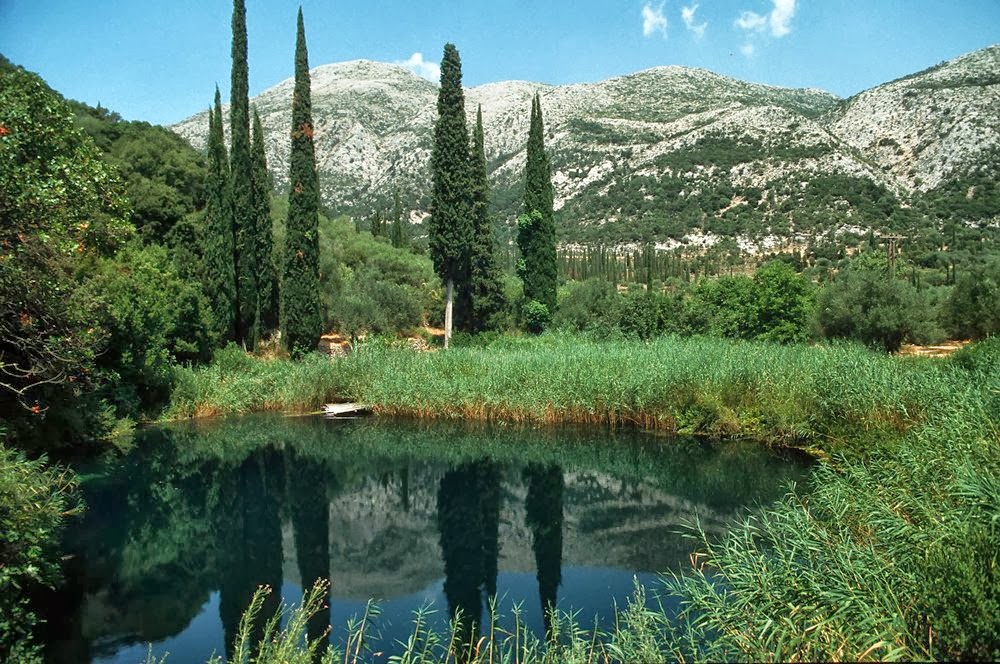
The springs and watering-places of southeastern Cephalonia are among the strongest geographical arguments linking the ancient district of Pronnoi to Homer’s Ithaca. Homer describes Ithaca as an island distinguished by its abundant, year-round water sources - a description that matches the hydrology of Kefalonia but contradicts the well-documented aridity of the modern island of Ithaki throughout the historical era.
What Springs Are Found in the Pronnoi District?
The region contains a remarkable concentration of water sources that correspond to Homer’s repeated emphasis on Ithaca’s streams and fountains:
Lake-Spring Great Akoli (Avythos): Located at Ayios Nikolaos in the Pronnoi district, Great Akoli is the most abundant source of water in southeastern Cephalonia. Its outflow for local water supply and irrigation exceeds 500 cubic metres per hour.
Lake-Spring Small Akoli: Situated at Koulourata in the Sami area, this spring produces a significant water outflow, particularly during winter months.
Lake-Spring Karavomylos: Found in the Sami area, this is another of the notable lake-springs characteristic of Cephalonia’s karst geology.
The Kolokasi Spring: Located south of the modern village of Poros, among the ruins of the ancient port of the Pronnaians, this spring gushes from a great rock at the foot of Pierovouni Hill. Beside the rock, an ancient pit or cistern measuring 7 × 8 × 3 metres was hewn from the ground, serving as a reservoir to channel water to the rest of the city. The spring supplied water to the acropolis of the port of Pronnoi in antiquity, to the colony of Maltese farmers brought in by Napier under the British Protectorate, and to the modern town of Poros after resettlement following the catastrophic earthquakes of 1953.
Additional Springs Throughout Pronnoi: Plentiful water for irrigation is recorded at Stou Lani ton Kambo (Potistis), Palaia Skala, Spathi, Fukalida, Alimmata, Pastra (Kefalovryso spring), Asproyerakas (Loutro spring), Kanallos, Kornelou, Xenopoulo-Kambitsata, Ayia Irini (Abelas spring), Solomata, Tzannata (Kanalias spring), Platies, Aryinia, Katelios, Valeriano, and Koroni - as well as springs at Lourdas, Prokopata, Argostoli, Sami, Koulourata, Karavomylos, Pyrgi, and Lixouri elsewhere on the island.
How the Springs Relate to Homeric Ithaca and Odysseus
Homer’s text leaves no doubt that abundant water was one of Ithaca’s defining physical features - a characteristic famous as far away as Troy (Od. 13.245–249): “The rain never fails, nor the refreshing dew. It has good pasture-land for goats and cattle, trees of every kind and streams of water that never fail.”
The “Well-Built Fountain”: Homer describes a public watering-place near the city (Od. 17.204–211), a stone basin built by Ithacus, Neritus, and Polyctor for the townsfolk, surrounded by a thicket of poplars, with cold water tumbling down from a rock overhead and an altar to the Nymphs erected above it. The Kolokasi spring at the foot of Pierovouni Hill matches this description: water gushing from a great rock, with an ancient hewn cistern beside it.
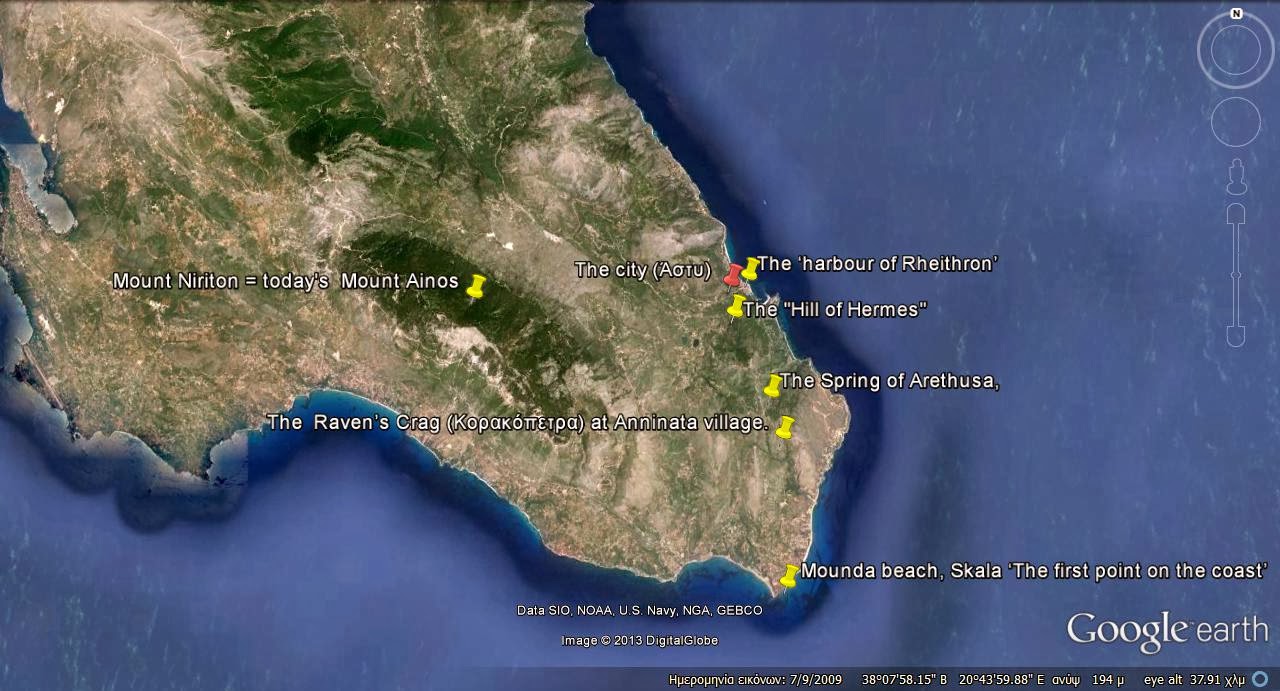
The Hill of Hermes (Pierovouni): According to Homer (Od. 16.470–474), the well-built fountain lay near the Hill of Hermes, which overlooked the city with a view of the port. Directly above the Kolokasi spring stands Pierovouni Hill (Περιοβούνι or Πυροβούνι), the most conspicuous hill in the area, rising above the ancient harbour with a commanding view across to the city site. Its name likely derives either from περιοράω (“look round, watch over”) or from πῦρ (“fire”), both consistent with the function of ancient Hills of Hermes as observation posts and signalling stations with watchtowers and beacons.
Diipolia, Cult of Zeus Polieus: In the vicinity of Pierovouni, the place-name Diipolia survives — a very ancient name indicating a connection to the cult of Zeus Polieus (Zeus, protector of the town).
Kathares Strates, The Clean Streets of Hermes: Also near the hill, the place-name Kathares Strates (“clean streets”) is applied to an extant stretch of ancient roadway passing over Pierovouni Hill toward the acropolis of the ancient port. According to Eustathius (1809.30–40), Hermes was honoured as the first herald and the first street cleaner; passers-by cleared roads of stones, piling them in heaps called Hermaia or Hermaioi Lophoi (Hills of Hermes) in his honour. The survival of this name preserves an ancient memory of the cult of Hermes the keeper of clean streets.
The survival of these place-names, Diipolia and Kathares Strates, preserving ancient memories of the cults of Zeus Polieus and Hermes, may guide future archaeological investigation toward the foundations of ruined Byzantine churches still visible on Pierovouni Hill, where traces of these earlier cults may lie beneath.
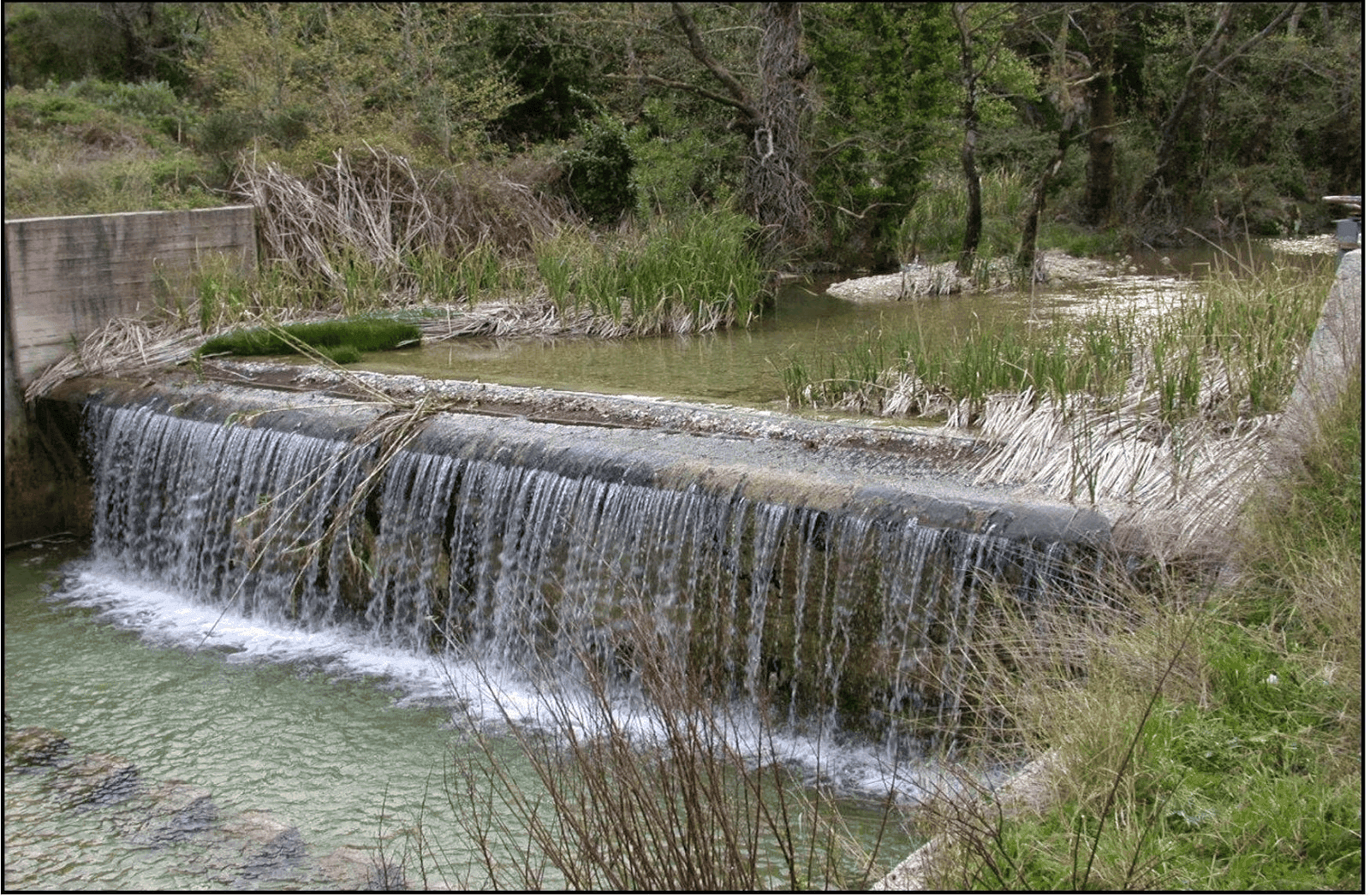
The abundant spring "Abela" at Ayia Irini. The water from this spring fills up the two technical lakes at Ayia Irini-Tzannata in the vicinity of the Mycaenean settlement and tholos tomb at South east Kefalonia.
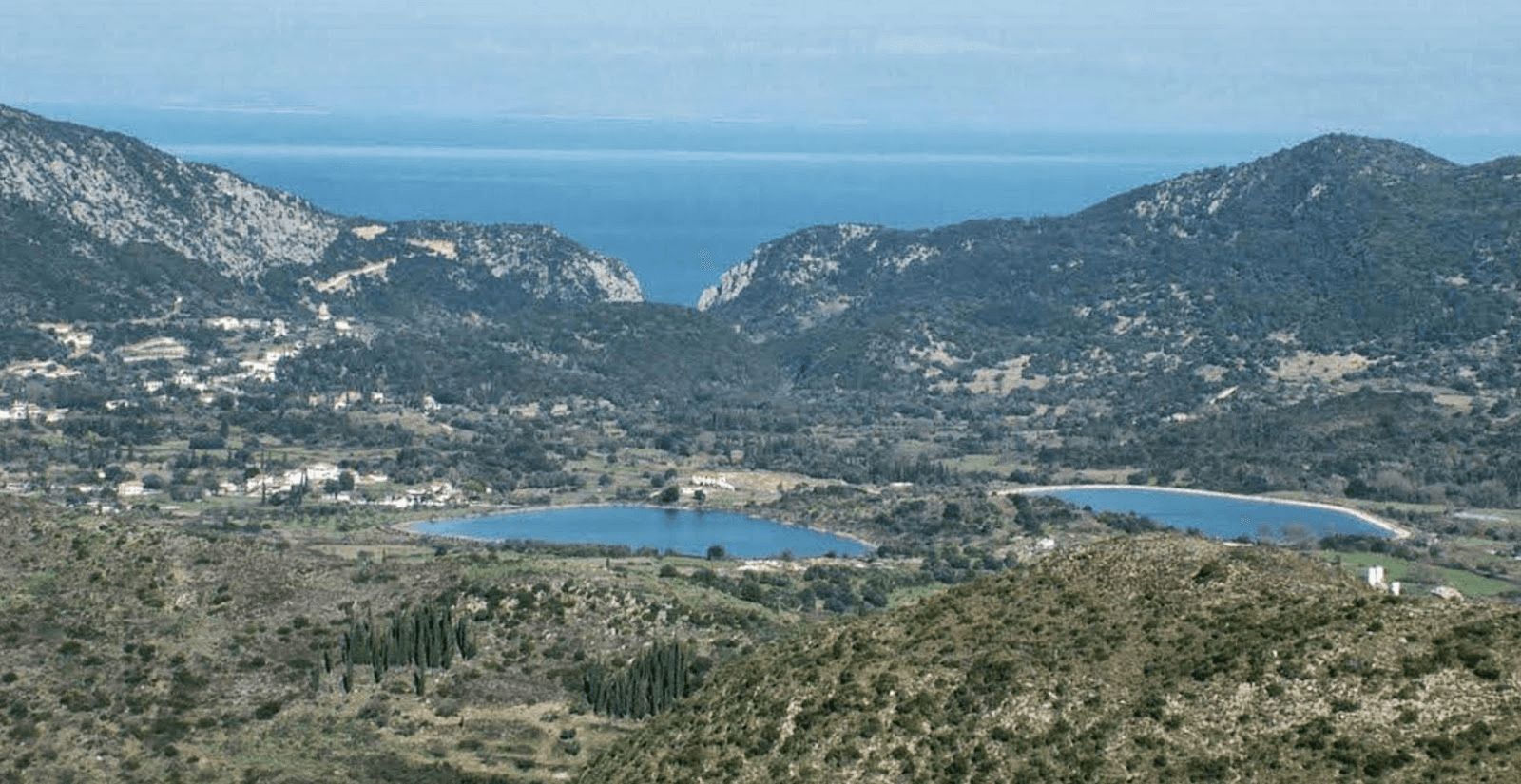
Technical lakes at Ayia Irini-Tzannata
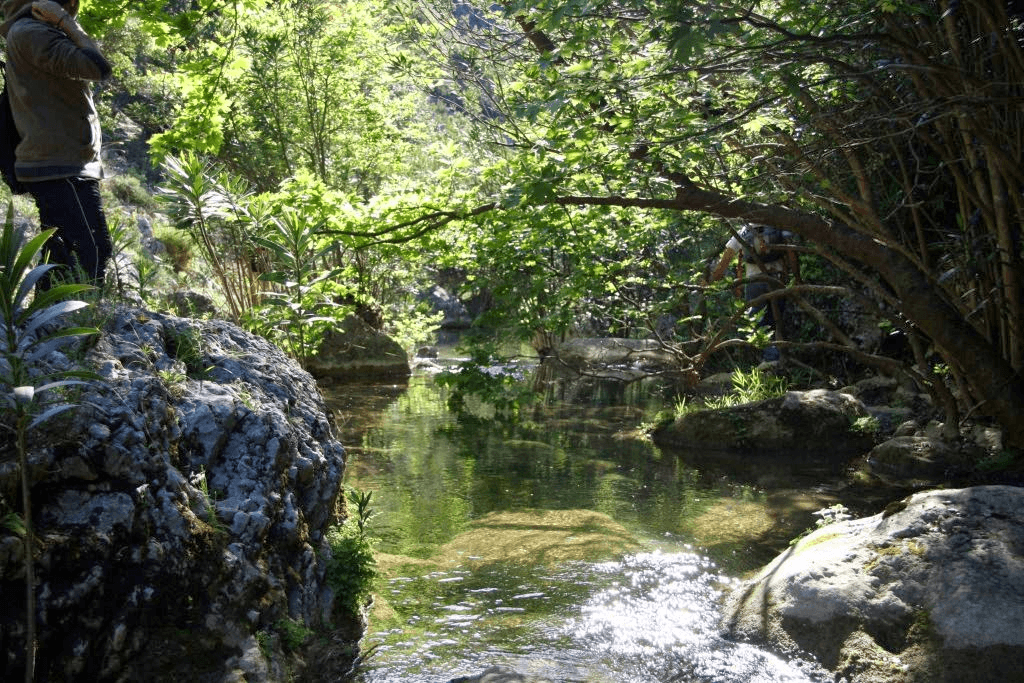
The spring "potistis" below Annitata village
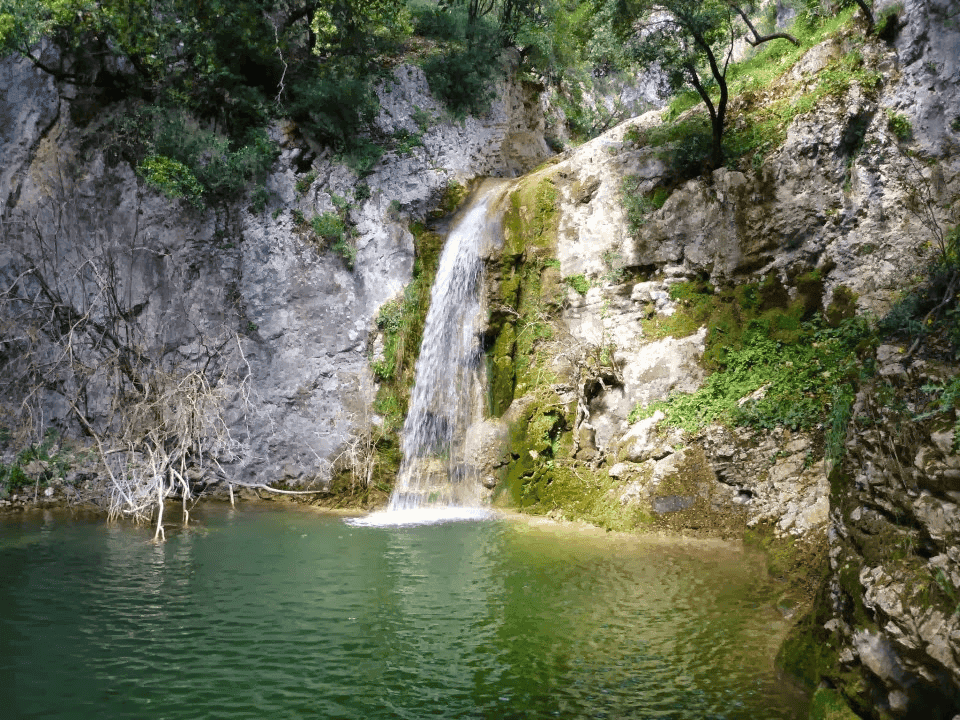
Spring "Potistis" at Gradou, Anninata village. Photo: Kefalonian wild Nature F/B
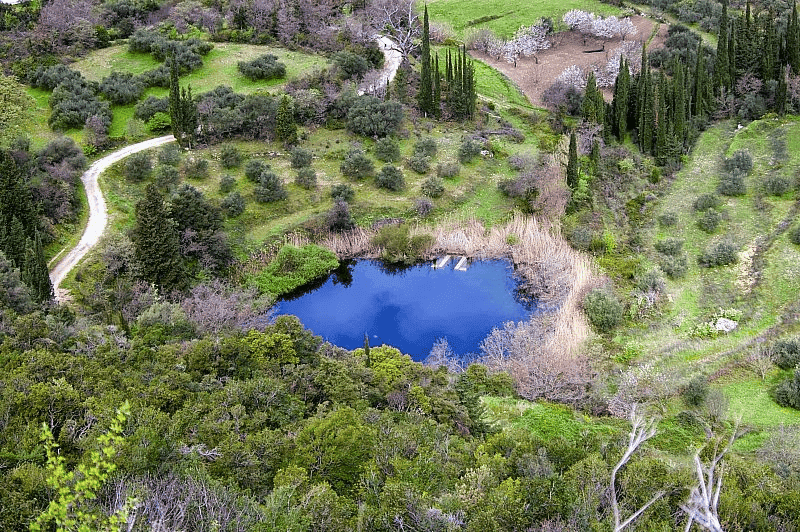
Lake-Spring "Small Akoli" at Koulourata, Sami area
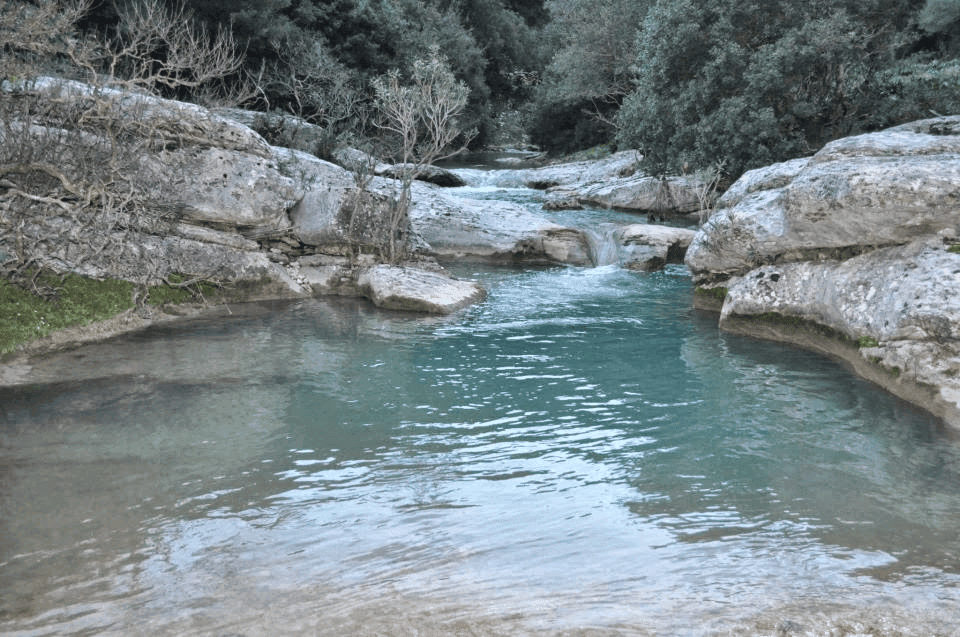
The water outflow from Lake - spring Small Akoli in winter time. Photo by Kefalonian wild Nature F/B
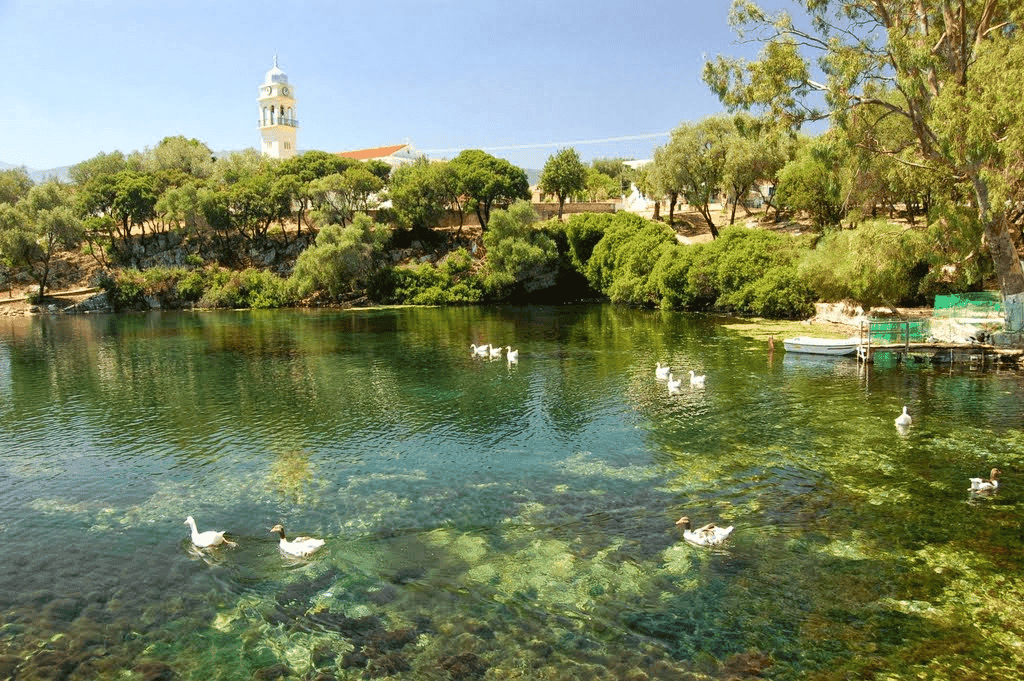
Lake- spring Karavomylos, Sami area. Photo by Johan VN, Panoramio google
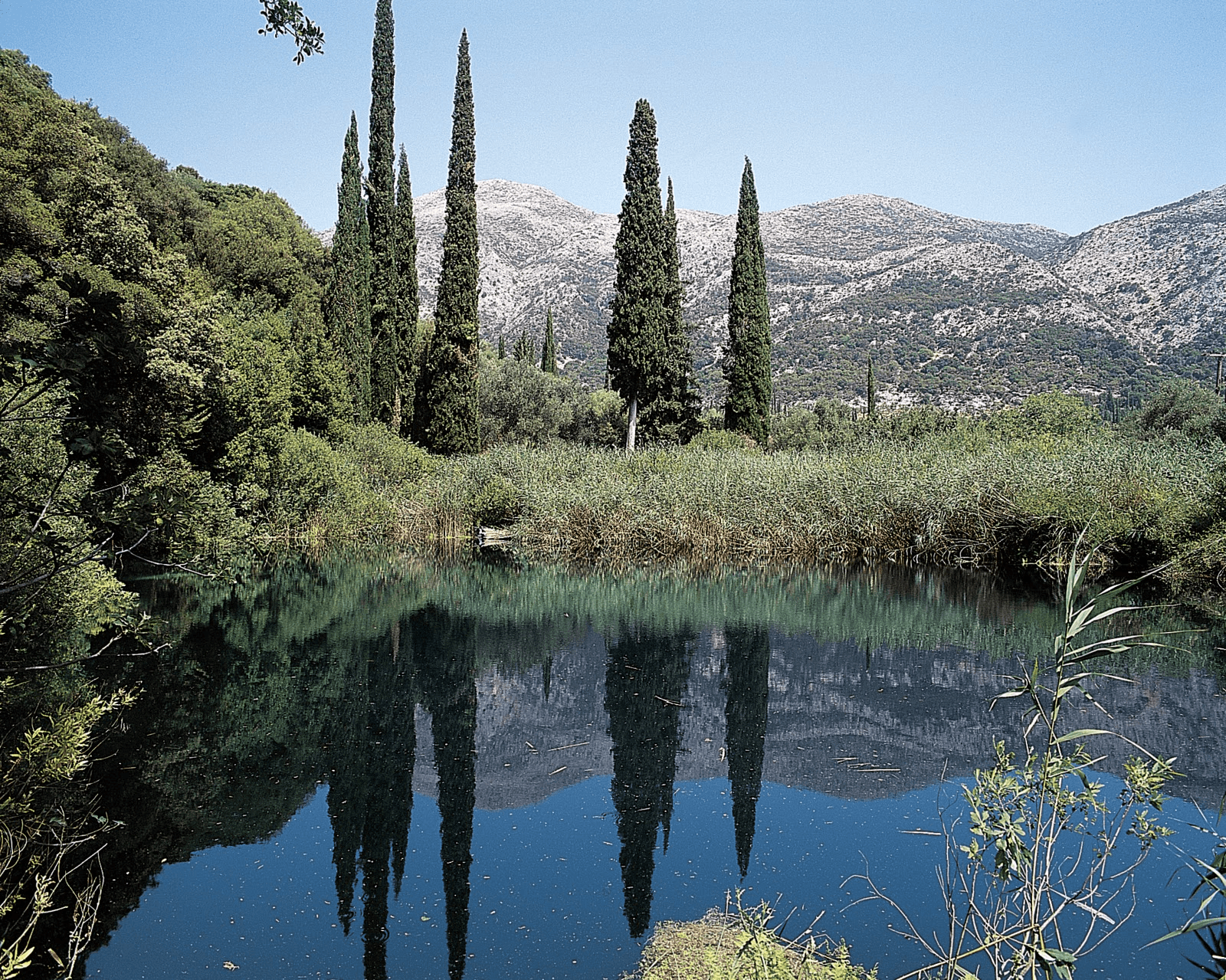
Lake - spring Akoli (also called Avythos) at Ayios Nikolaos, a village in the Pronnoi district, where the outflow of water for the local water supply and irrigation is over 500 cubic metres per hour.
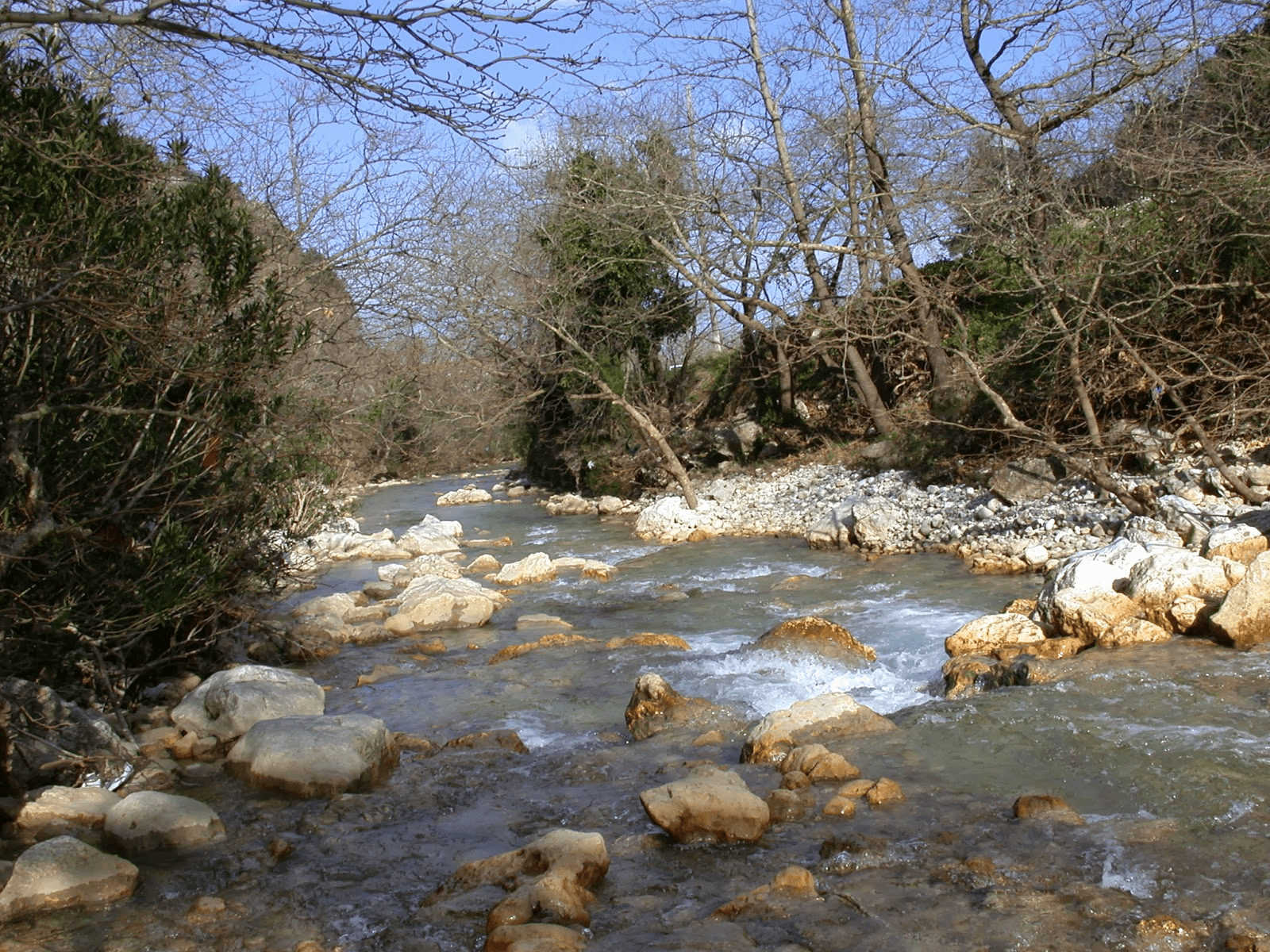
The water outflow from Lake - spring Akoli in winter time.
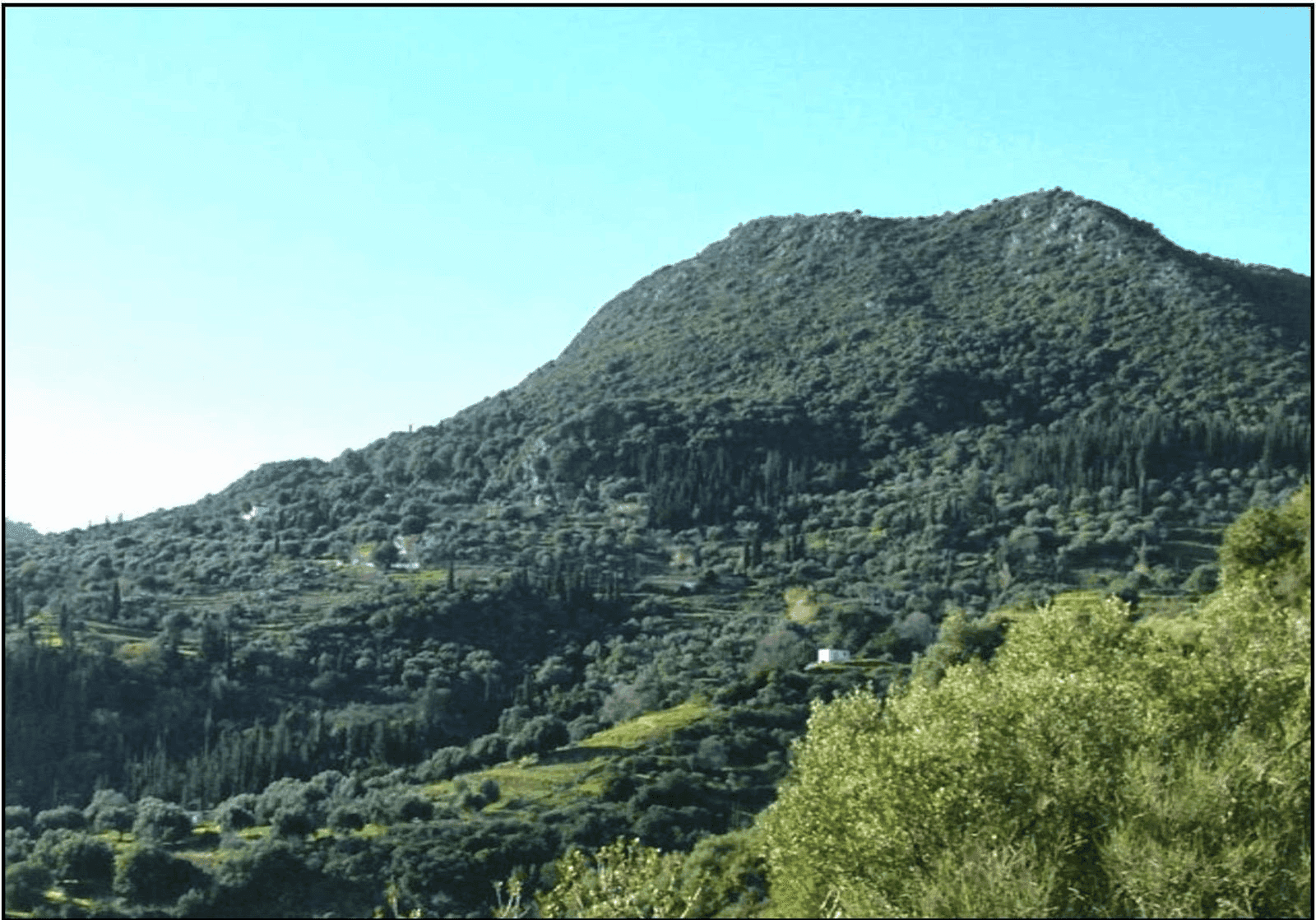
Pierovouni Hill, showing the location of the Kolokasi spring at its foot, where water gushes out of a great rock.
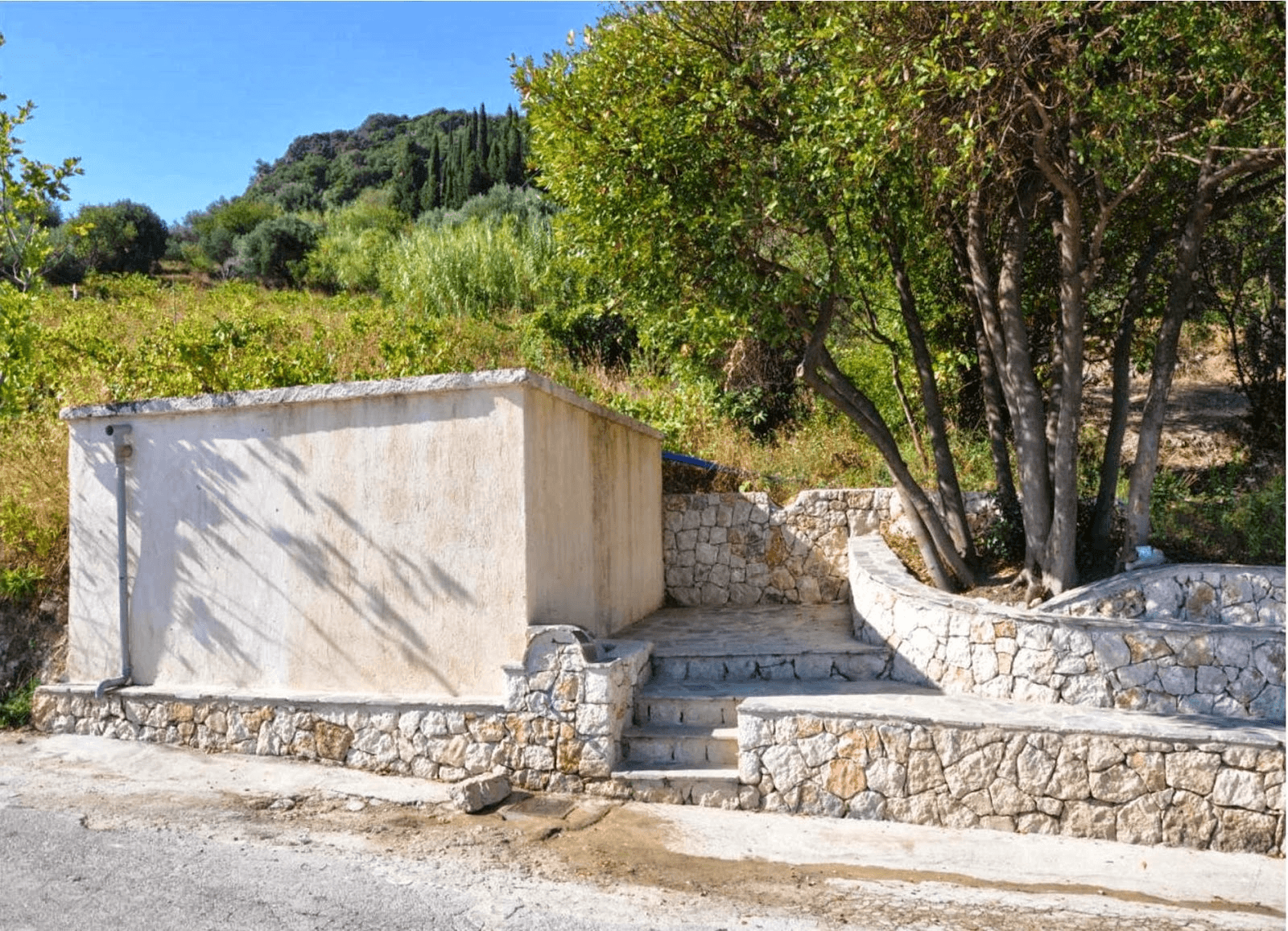
The spring "Kolokasi ". The new 'well-built fountain’ as it is today underneath the rock at the lacation Pierovouni. The water from this spring has been incorporated in the watersupply system of Poros village.
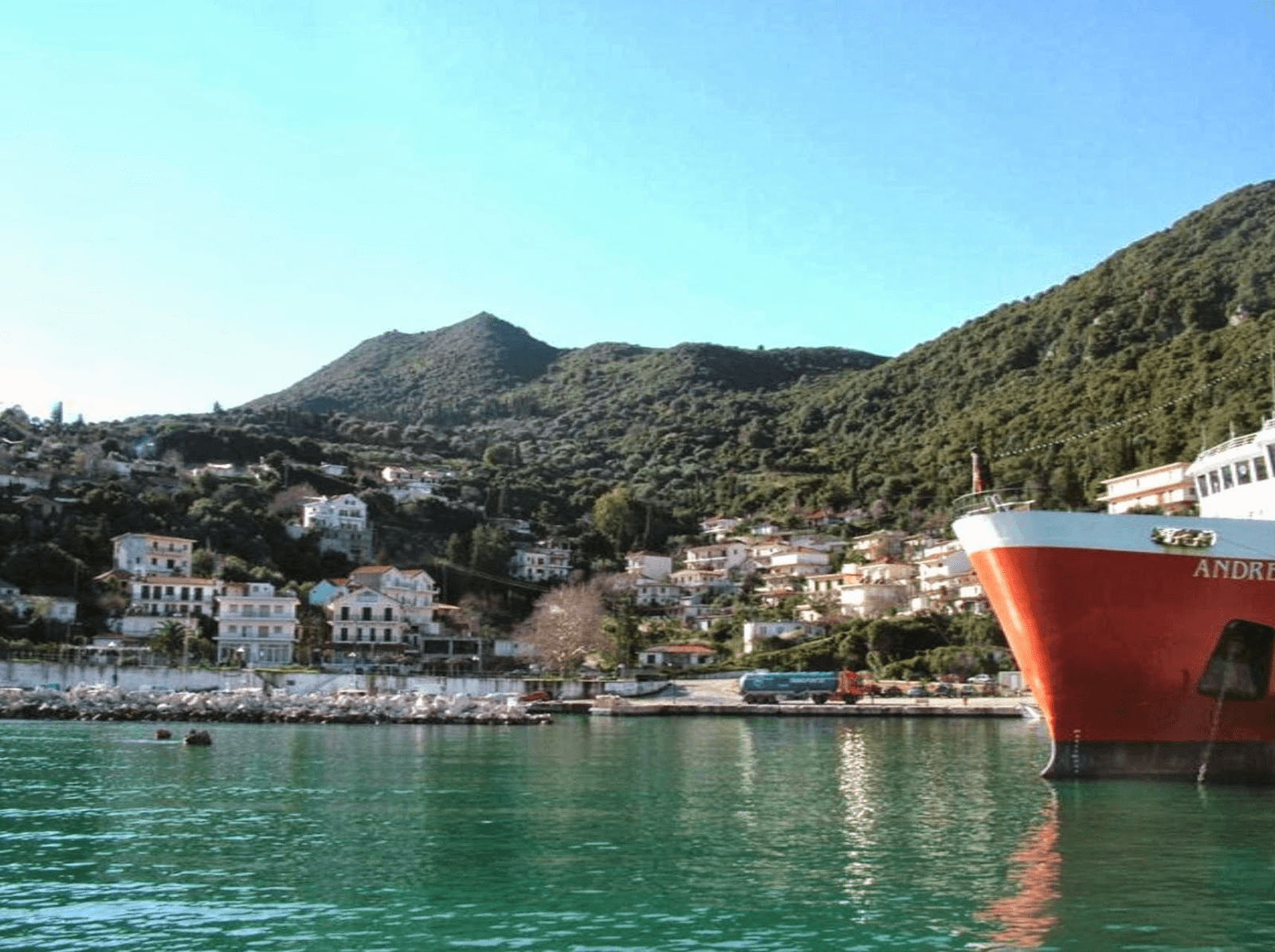
The conspicuous Pierovouni Hill (Hill of Hermes) south of the modern town of Poros and the ruins of the ancient city, overlooking the ancient port of the Pronnaians.
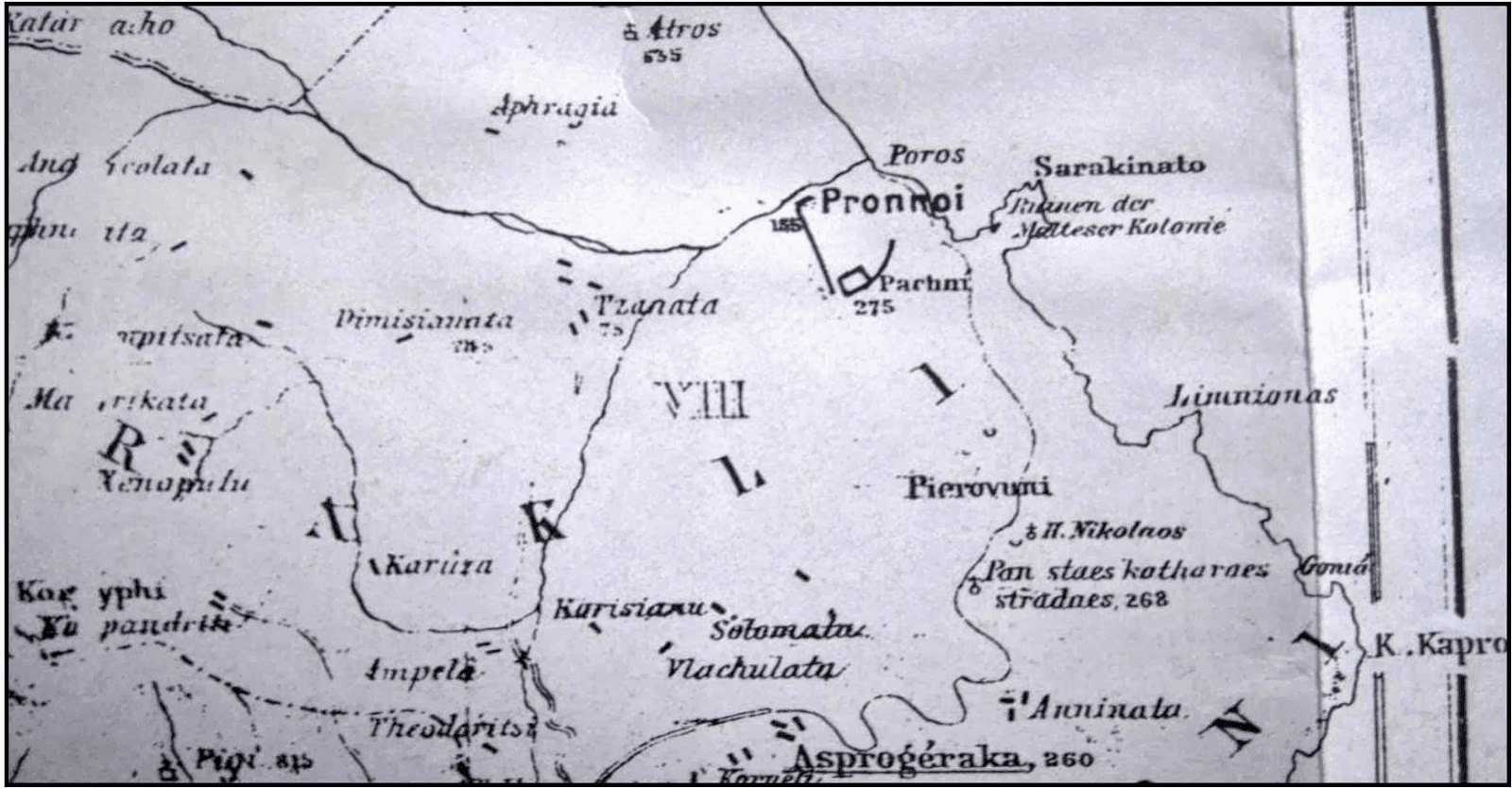
Part of Joseph Partsch’s map (1891) marking Pierovouni (Pierovuni) Hill, Kathares Strates (Pan staes katharaes stradaes), the city walls of ancient Pronnoi above Poros and the coastal locality called Limnionas or Limenia (both meaning ‘Harbour’). This last calls to mind the Homeric word Neïon, also meaning ‘Harbour’, which shows that the semantic content of the ancient place-name has survived intact to the present day.
Selected bibliography
Othon Riemann, Les îles Ioniennes, 1879, pp. 56–57.
Antonios Miliarakis, Γεωγραφία Νέα και Αρχαία του Νομού Κεφαλληνίας, Athens 1890, p. 41.
Joseph Partsch, Kephallenia und Ithaka – eine geographische Monographie (in Greek translation), Athens 1892, pp. 26, 190–191.
NHRF/Centre for Byzantine Research, Sources 5, Ανδρέας Αμάραντος, Νοταριακές πράξεις, Αράκλι Κεφαλονιάς (1548–1562), Athens 2001, pp. 162, 310.
Henriette Putman Cramer – Gerasimos Metaxas, Homeric Ithaca: An unidentified Mycenaean center in the islands of the Cephalonians, Cactus Editions, Athens 2000.
Where Is It?
Gallery